

Transformation: Don’t Become a Square Watermelon
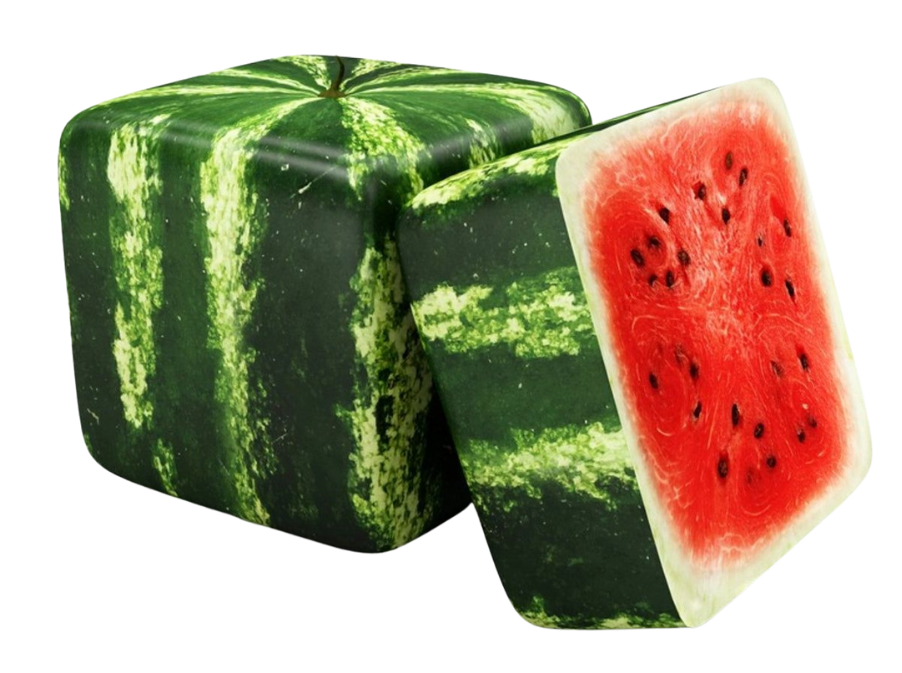
Have you ever seen a square watermelon?
In Japan, some watermelons are grown inside molds that give them this unusual shape. A square watermelon is easier to stack and display than a round watermelon.
At its core, though, it is still a watermelon.
I have never tasted a square watermelon, but I hope it keeps the qualities that make a watermelon a watermelon: sweetness, juiciness, and a refreshing taste. Its shape may have changed to serve a purpose, but its basic nature has not. It does not suddenly taste like beef jerky, hummus, Dubai chocolate, or papaya.
It is simply a watermelon in a different shape.
We humble and imperfect humans—HIHs, as I like to call us—also change our shape to meet the needs of others. We may try to appear friendlier, calmer, more accommodating, firmer, or more confident. Sometimes this is a healthy choice. We adjust our behavior while staying connected to who we are.
Other times, we change so much that we begin to lose ourselves.
Emotional intelligence (EQ) asks us to notice the difference.
What is motivating me to act this way?
Am I making a thoughtful choice, or am I reacting to pressure?
Am I adjusting how I communicate, or am I hiding who I am?
Our emotions can offer important clues. Regret, shame, resentment, and guilt may signal that we are giving up too much of ourselves. We may be trying to satisfy a person, fill a role, or meet a social expectation that does not fit us.
Many of us have been taught to do this. We learn to keep the peace, avoid conflict, prove our value, or put everyone else first. We can force ourselves to fit almost anywhere when we believe we have no other choice.
We may function. We may even succeed.
But there can be a cost to our health, confidence, relationships, and effectiveness. Our priorities begin to change. Our voice becomes quieter. Over time, our sense of self may become buried beneath what others need or expect from us.
But is that transformation? Not necessarily.
Changing your shape under pressure is not the same as transforming. Real transformation is not something that is done to us. It is a process we choose to take part in. A process we choose to be responsible for. While it is big work it is something that any one can engage in with a clear start and commitment to themselves and the process. Maybe there is a place you inhabit in your work, your world, that you are ready to transform – start here:
First, transformation requires us to focus on what we can control: our thoughts, feelings, behavior, choices, and motivations. It asks us to become more honest with ourselves while also treating ourselves with compassion.
We might ask:
“Is this who I am?”
“Is this what I believe?”
“Is this who I choose to become?”
Second, transformation requires openness. We grow by meeting people, exploring ideas, reading, listening, and having experiences that challenge us. This does not mean accepting every opinion as true. It means understanding that we do not know everything.
We become willing to examine our beliefs instead of only looking for proof that we are already right. We decide what still fits, what needs to change, and what we are ready to release.
Finally, transformation does not require us to give up or give in, shrink, or show up as less. In this, emotional intelligence helps us bring what we know about ourselves into our relationships with greater honesty and care.
Healthy transformation allows us to examine, grow, and honor the best parts of ourselves while building stronger and more authentic connections with others.
In this way, transformation is a foundational key to resilience. Our emotional intelligence helps us understand ourselves, notice what is happening around us, and respond with intention. It allows us to adapt without disappearing.
As our awareness grows, we become better able to separate what is truly happening from the story we are telling ourselves about it. We notice which thoughts and behaviors create tension and which ones help us feel grounded, clear, and connected.
With committed practice we build the emotional muscles needed to express ourselves through conscious choice rather than automatic reaction.
Emotional intelligence does not tell us to remain exactly the same. During transformation EQ gives us the freedom to grow while staying connected to what is true and important to us as we choose to transform ourselves and our relationship to what matters to us.
You can adapt.
You can stretch.
You can grow.
You can become more fully yourself.
Just be careful about allowing the world to press you into a shape that serves everyone except you.
Mostly, don’t become a square watermelon.
